
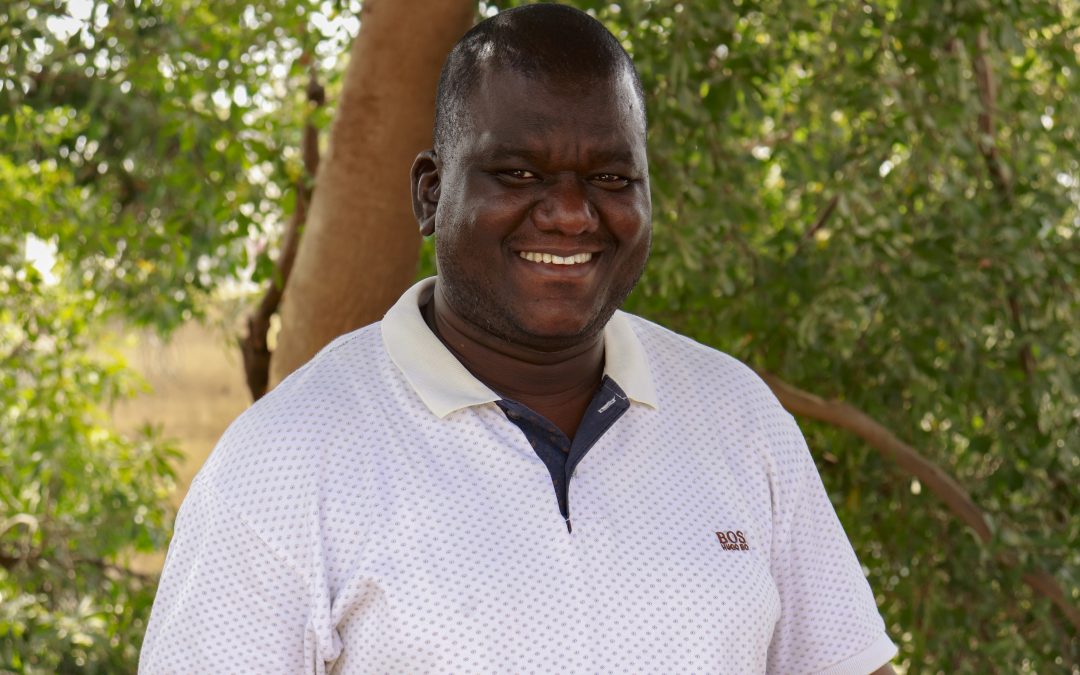
Dr. N’Diaye Sidy Bathily is a man of principle, of deeply-held beliefs.
He is also a man of discipline, which he applies to both his personal and professional life. These qualities make him an exceptional quality improvement coach – perhaps an unforgettable one.
I was still laughing about it a few days ago, during a debriefing at one of our partner sites where the midwife told me that she had been so troubled by the mystery patient survey that every woman who came to her, she felt like she was a mystery patient. Each time, she felt like she could hear the whisper of my voice saying: Pay attention! What are you about to do? Everything you need to do must comply with the standards, so make sure you do it carefully!
For Dr. Bathily, there is probably no higher compliment.
Finding his path
Dr. Bathily’s commitment to service started early. Originally from the village of Lany Tounka about 85 kilometers from the city of Kayes, he nurtured the dream of becoming a doctor, engineer, or pilot from a very young age.
Over the years, his interest in biological sciences grew, and medicine eventually became his chosen path. In 2012, he earned his doctorate in general medicine from the University of Bamako. From then on, he set goals for himself: to leave a positive mark on the healthcare system, to pass on sound working methods, and to contribute to the improvement of professional practices.
His professional career began with Mali Health during the Ebola response, a pivotal experience. It was his first official position with a formal contract. He had worked in two medical clinics, not as a full-time physician, but as the on-call doctor. In 2012, he applied for a civil service position, but the idea didn’t particularly appeal to him. During his hospital internships, he was struck by certain practices he observed among his senior colleagues, often far from best practices. These observations instilled in him a desire to bring those best practices and improvements into the health system.
One early career moment remains with him. Dr. Bathily was hired by Mali Health’s director at the time, Mariam, who was an expert at providing feedback and earning her confidence was like a badge of honor. During his end-of-year evaluation in 2015, Mariam shared with him: When we were interviewing the candidates, Dr. Bathily, you were the last to be recruited for the Master Trainer position on the Ebola Yanbila! project. If I had to do it again, I think you would be among the first. He has never forgotten the confidence placed in him and those words serve as a reminder to work every day to live up to his own high expectations.
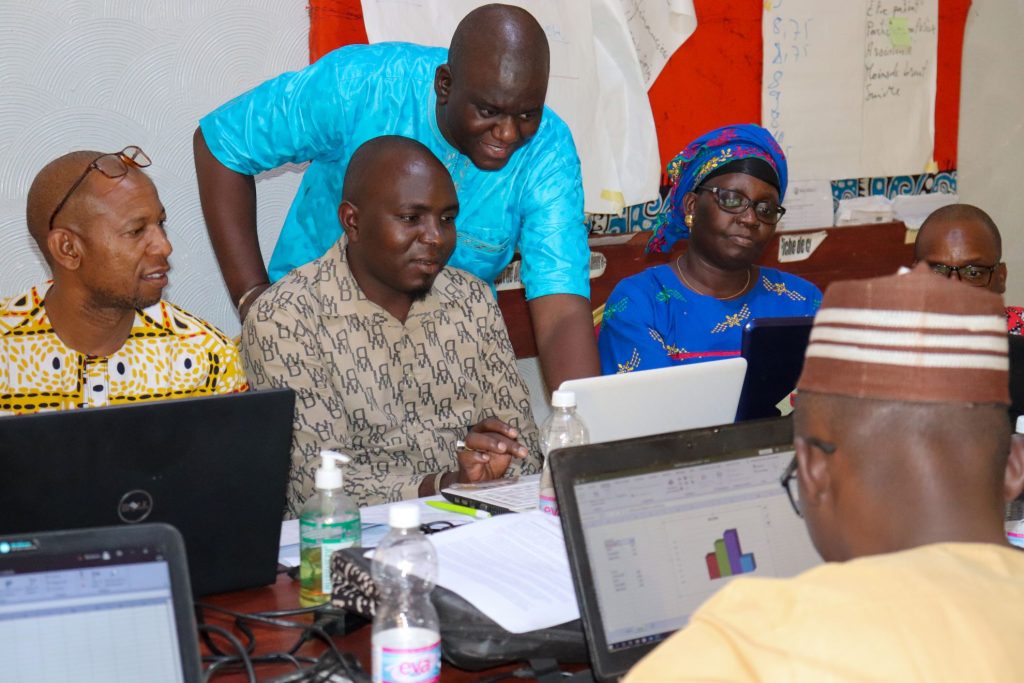
When the Ebola Yanbila! project ended, Dr. Bathily joined Mali Health’s staff as a Quality Improvement coach and the medical director of our community health program. In these positions, he has been able realize his desire to work alongside the public health system and to contribute to the improvement of professional practices.
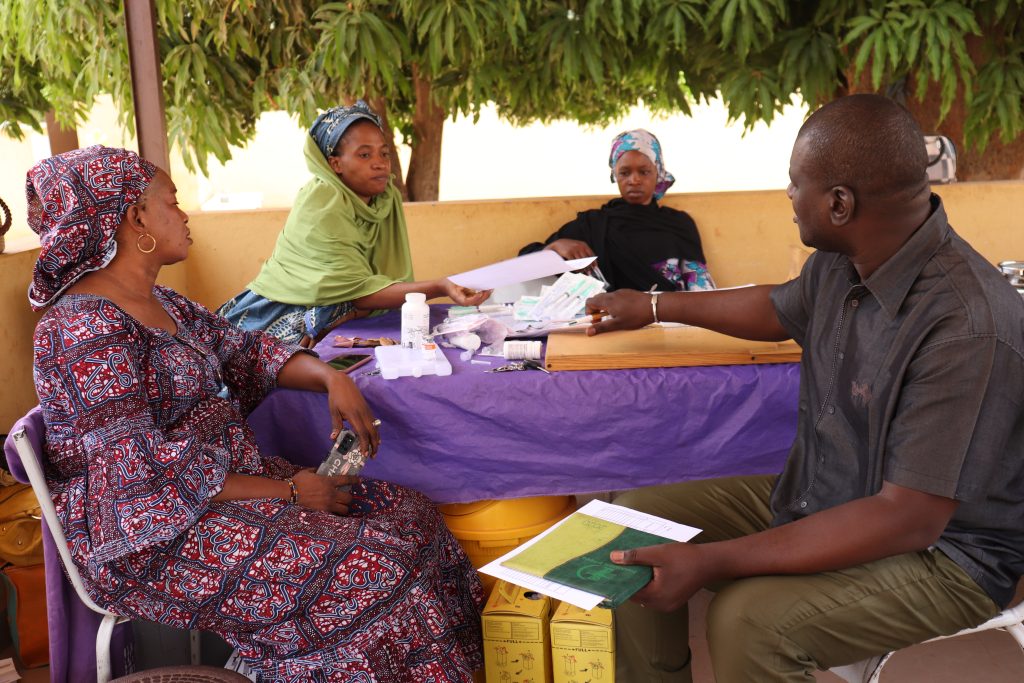
In addition to his responsibilities with Mali Health, Dr. Bathily still works Saturdays at one of the clinics where he first worked as a young doctor. The clinic in Baco Djicoroni ACI is far from his home in Kati, at least 20 km, but the distance is worth it. His presence at the clinic allows Dr. Bathily to maintain contact with patients and a connection to the place that gave him his start. It allows him to keep his medical knowledge sharp by seeing new cases, protocols, and even conducting research. Perhaps most importantly, it allows him to stay in touch with friends and family in the neighborhood – his older brother’s family lives nearby.
In this way, he found the path that suits him best—as is said by the Bambara expression Ko, chi Bina, a tomo minan kono which conveys the idea of a path tailored to you, one destined to be your own.
Navigating Recent Challenges
For Dr. Bathily, working in medicine and public health is first and foremost a calling. His greatest reward lies not in a salary, but in the peace of mind and relief he can bring to patients, or in answering their questions. He works daily to uphold standards, improve the quality of care, and promote best practices, with a constant desire to share knowledge, inspire others, and leave a lasting mark on the healthcare system.
But leaving a mark isn’t just about taking action when everything is going well. It’s also about staying committed when circumstances become difficult, which Dr. Bathily knows well.
It was about 18 months ago, the NGO sector faced numerous difficulties, particularly financial ones due to budget cuts, leading to reduced working hours and a reorganization of services.
With this turmoil, doubt crept in, and for the first time in 10 years, Dr. Bathily considered leaving the NGO sector entirely. He heard some colleagues talking about salaries much higher than his, and he sometimes wondered if he didn’t deserve better. But he took a step back and asked himself a crucial question: Is this not really where I belong? He remained convinced of the importance of his mission, of what he was doing, and of the impact he could have on those around him.
Determined to hold on to his principles, he leaned into his discipline. Thanks to his organizational skills, planning, and prudent management, he was able to mitigate the great effects of the turmoil, both in the NGO sector and in Mali more broadly. He reorganized personal and family needs and found a way to see his family through the most difficult periods.
When I was a medical student, I already knew how to plan my expenses and live on limited resources. I would put aside a portion of my income and gradually build up an emergency fund. Sometimes, students earning five or six times my scholarship would even borrow money from me before the end of the month, waiting for their parents to transfer funds. It became a routine for me; I plan my monthly and annual expenses, especially those related to water, electricity, transportation, and family needs. I also try to buy quality products at the lowest cost and avoid unnecessary spending. For me, this culture of planning and financial discipline should also be applied in healthcare settings. Just as a healthcare professional must maintain a safety stock of medications, everyone should be able to develop an emergency fund in their personal life. Preparing for contingencies shouldn’t be improvised, but should become a genuine practice.
It was not an easy period. In addition to the changes in funding, armed conflict was escalating and Bamako was experiencing increased threats and interruptions, including blockades on the city that interrupted daily life in numerous ways. Then, on April 25, 2026, armed groups attacked the military base in Kati, less than a kilometer away from where Dr. Bathily lives with his family.
It was a painful and traumatic experience. We clearly heard the first explosion at dawn and the subsequent crackle of gunfire. I was terrified, but I had to remain calm to reassure my family. I missed my appointments at the clinic that day because I couldn’t go. When the children asked me about the noises, I told them it was thunder, that the weather was threatening, and that it was going to rain. I was so frightened that the following Saturday I again decided against going to the clinic again. I wanted to remain close to my family.
Among those killed was a colleague with whom Dr. Bathily worked closely at the Malaria Research and Training Center (MRTC) between 2011 and 2014. He was a mentor, giving advice on preparing for his thesis defense.
He was two years my senior and a truly hard worker and humble man. It’s a real tragedy for all of us.
Finding the way forward
One of the pioneers of quality improvement in healthcare, Paul Batalden, once noted: Each system is perfectly designed to achieve exactly the results it achieves.
This is a credo that Dr. Bathily lives by. Despite the extraordinary challenges he, his family, and his colleagues face – he remains determined and his mission continues.
For me, in the field of Quality Improvement, we are pioneers in Mali. It’s our baby that I’ve watched grow, but not quite reach maturity. So I want to continue nurturing it until the time is right for it to fly on its own. Going elsewhere might have meant adopting their mold, which doesn’t necessarily align with my vision. There are many NGOs, but few do exactly what we do at Mali Health.
As the sector changes, partners are adjusting, some more than others. At some sites, the key participants of the QI process (ASACO and CSCom stakeholders) are working hard to achieve better results. They have taken ownership over their QI processes and recognize it is not a Mali Health program, but rather their own.
Others remain unwilling to break with the past, instead finding it advantageous to operate within opaque management systems and where conflicts of interest abound. Dr. Bathily remains concerned about those who resist changing poorly performing systems. It was typical in the NGO sector to incentivize participation or and the adoption a certain organization’s model or approach. He feels that has done considerable damage to the health system, and intentionally or not, it is a result that the previous system was designed to achieve.
Money has become the primary motivation for healthcare in Mali. This further complicates our mission. When we encourage healthcare workers to implement quality improvement initiatives within their facilities, they immediately ask how much they themselves will gain. Some community health workers have openly stated that we are bothering them with quality improvement, as they stand to gain nothing personally, even if patient satisfaction and attendance at the community health center improves. Meanwhile, some community health associations (ASACOs) are unwilling to share their performance reports with their communities for fear of exposing their mismanagement.
Despite these challenging situations, there are those who believe in us and our approach. We are often contacted by healthcare facility managers regarding quality issues or requesting support in capacity building.
Those colleagues and fellow believers keep Dr. Bathily focused and motivated. Seeing professionals gradually integrate best practices into their daily work is a real source of satisfaction.
Nevertheless, I am convinced of what I do and the impact I can have on those around me—at work, in the community, in the neighborhood, and at home. When new methods are introduced, the beginnings are often difficult and can elicit criticism. But over time, people understand the value of the change and sometimes end up integrating it into their daily routines. One of the main changes instilled in healthcare providers was the understanding of teamwork. Indeed, some providers work hard but not intelligently. They don’t utilize the human resources available to them, even though this could help them in their tasks and, in turn, produce extraordinary results for the CSCom.
The transformations that Dr. Bathily has supported local QI teams to realize speak for themselves. Mali Health’s contributions to national quality improvement policy are the result of his work.
Remaining true to his mission
After a period of such extreme uncertainty, which is still ongoing in many ways, Dr. Bathily’s principles and discipline provide consistency – both to his colleagues and to his community.
One thing is certain: I feel I’m in the right place, that my contributions matter, and that my name is associated with the Mali Health brand. This is very important to me; in a world where influence often brings people to power, you have to have your own soft power.
His approach to quality improvement is just how he approaches the world. His soft power may come more from the fact that he is a true living example of his work.
“Today, I believe that planning, the ‘five whys,’ Kaizen, and other tools learned professionally must first be applied to personal life. You can’t claim to use these methods effectively at work if you don’t already apply them at home. Therefore, rigor, organization, and the constant search for solutions are part of my way of life.”
Personally, in my family and neighborhood, my decisions are never made haphazardly. When I make a decision, I stand by it fully; I do what I say and I say what I do! One thing is certain: I don’t simply side with the masses. If the strategy of the masses doesn’t convince me, I prefer to remain neutral. For example, several neighboring families had enrolled their children in more expensive schools 5 km from their homes, something I disapprove of for children in elementary school. I enrolled mine in a mid-range school in the neighborhood, less than 500 meters from our home. On October 1st, the first day of school, I was quite surprised to see some students transferring from these very expensive schools to ours.
Dr. Bathily embodies his mission and his values. And apparently we are not the only ones who notice.
During the past year, there were times when movement across Bamako was not safe or fuel was simply unavailable – so children couldn’t go to school and parents could not go to work. When he was home during that period, Dr. Bathily continued to work, to read, and to prepare his reports and documents.
Without realizing it, he had become a role model for the neighborhood children who watched him closely.
At only eight years old, the son of a neighbor, known in the neighborhood for his unruly temperament, once impressed his mother by saying to her: “I’m going to be like Cheick’s dad.”
Since then, the little boy has calmed down. He is now in his third year of primary school and his academic results continue to improve. Upon learning this, Dr. Bathily, deeply moved, thought:
Wow, if I can inspire a child, that’s already something!