No more dusty street corners.
Instead, every week, the women of Kolo Ni Fassa meet around two savings accounts. One is for their gardening cooperative. The other is for their health.
They live in Sabalibougou, a neighborhood in Commune V of Bamako. For years, each member cultivated whatever small piece of land she could find in her community – backyards, small vacant plots, and even along the street. Water was limited. Their inputs were costly. But they kept gardening.
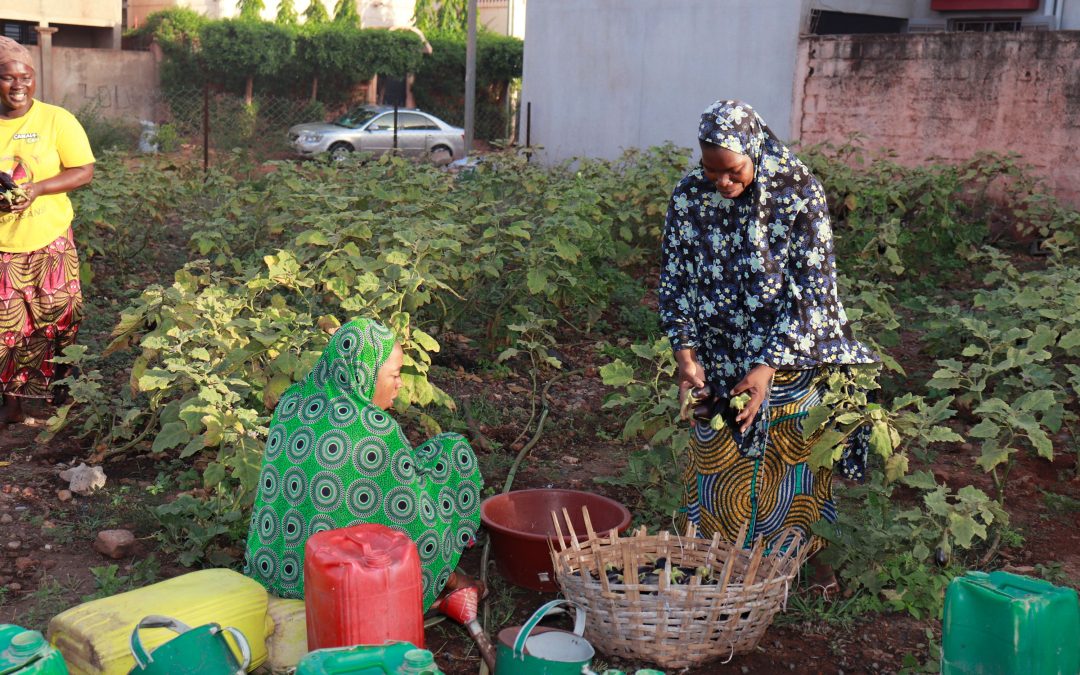
Then, at the end of 2023, they turned their shared passion into a shared opportunity. Twenty two women decided to pool their resources and organize into a cooperative. They chose the name Kolo Ni Fassa, meaning strength and tenacity in Bambara.
The name suits them well.
Collaboration to overcome shared challenges
In forming a cooperative, the members aimed to increase the level of their gardening activities and generate more revenue. It also allowed them to tackle one of the greatest challenges in a rapidly growing city: access to adequate land.
Land in Bamako is extremely expensive. It is perhaps the biggest barrier to urban agriculture in Bamako. Cultivators will often work empty plots in their community whose owners intend to return one day to build homes. Once the owner decides to start building, gardeners will lose all the time and resources they have invested to improve the soil.
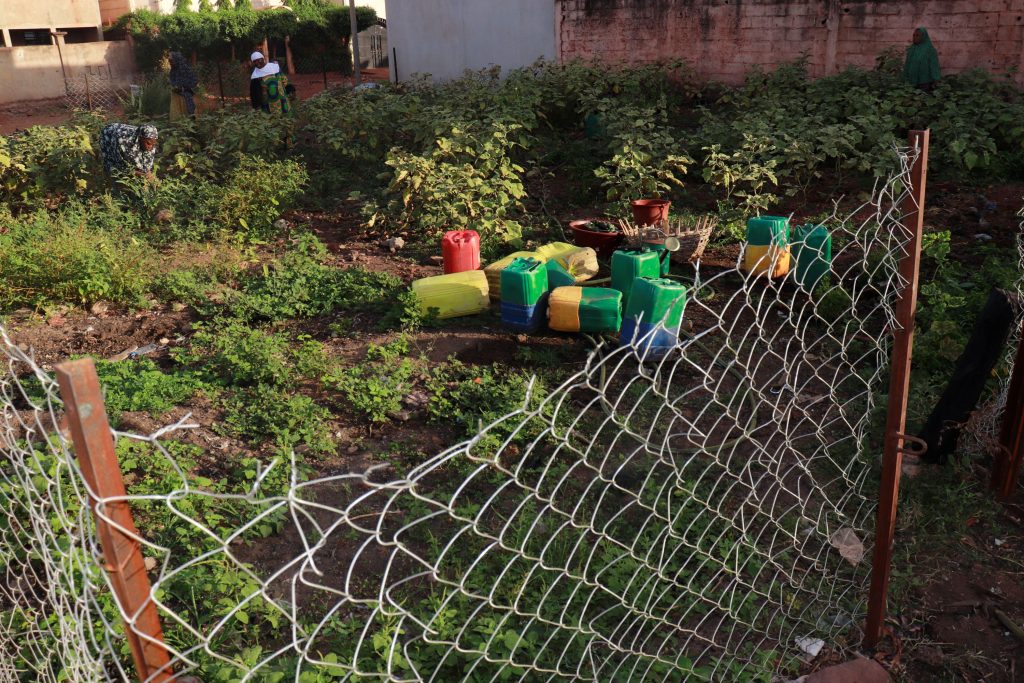
Buying land was beyond the means of Kolo ni Fassa, so they found another solution. Working with a community leader, they secured a 300m2 plot to rent in the Plateau district, providing them with a stable base on which to build their garden and fulfill their vision.
With support from Mali Health, the women of Kolo ni Fassa completed a training in gardening and organic composting to refresh their knowledge and skills, and received a small grant for equipment. They started to work the land, putting in long hours to make it suitable for cultivation.
To address another constant consideration – a steady water supply – they invested nearly $100 of their own funds. Rain fluctuates with the seasons. While they take care to save every drop of water, irrigation is a necessity in their arid locale, on the frontlines of climate change. Their next goal is to increase their storage capacity so that a water shortage does not become a lost harvest.
A cycle of reinvestment
As their operation grows, so do the resources they generate and share with each other. Steadily and incrementally, they are increasing their self-sufficiency by building a system that relies more on what they can produce and manage themselves.
In one area of their garden, they produce their own organic compost using waste from their garden, their own households, and the surrounding community. Compost not only enriches the soil by adding nutrients and improving soil composition, it means they no longer need to purchase chemical fertilizers. The cooperative transforms a waste product into a valuable resource, creating a regenerative model that also restores environmental health. Composting strengthens their soil and plants, the quality of their vegetables, and the impact they have on their community.
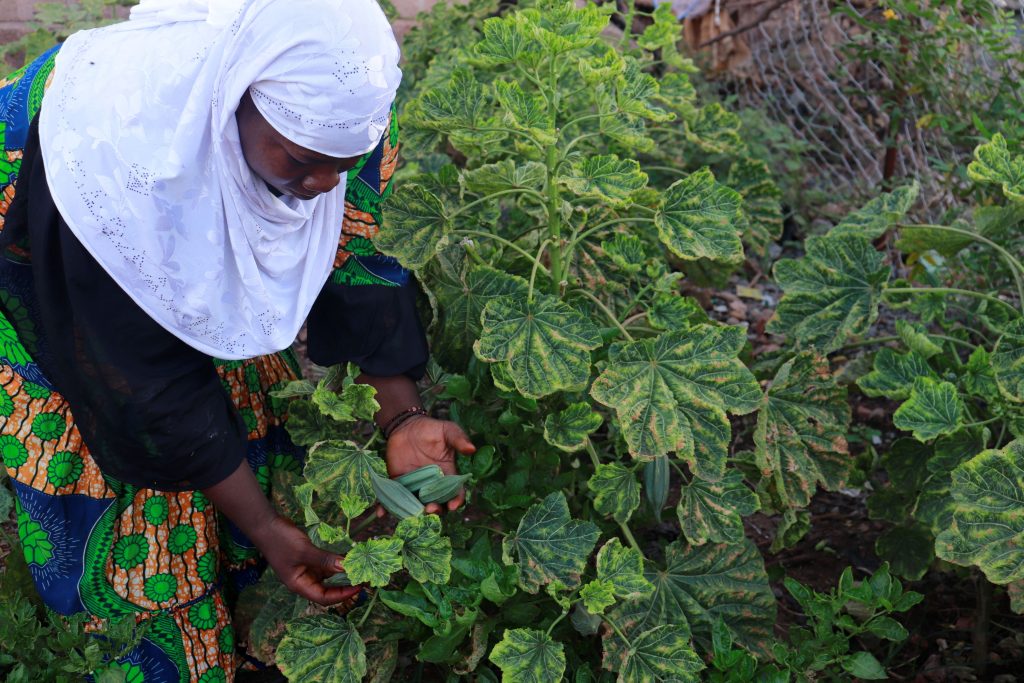
With the care and effort they have invested, their garden now produces several varieties of vegetables.
Some of the harvest goes home with the cooperative members. By consuming some of their own produce, families have steady access to fresh, organic vegetables, which improves the nutritional quality of their meals and reduces the impact of food price fluctuations at the market, an increasingly common occurrence in Bamako.
The rest of their vegetables go to market. Each time they harvest, about every 2- 3 weeks, they earn between 30,000 and 62,000 FCFA, or between about $55 – $113. A portion of those funds go right back into the cooperative for needs like buying seeds, improving compost production, or saving for that water storage. The rest is divided between the members, providing income that helps families pay for everyday needs, including food, healthcare, and children’s education. The combination of fresh, healthy vegetables and additional income strengthens household food security and provides stability in managing daily needs.
Shared pride in their results
Their families are not the only ones benefiting. The cooperative has built up quite a following.
Because of their organic production methods, their vegetables are of a higher quality than the others available at the local market. The vegetables and leaves stay fresh longer. Customer satisfaction and trust is high. Though they began by selling directly to individual customers, the cooperative shifted to wholesale sales. Today, 41 loyal customers await each harvest.
The cooperative’s president recalls when every woman was working on her own. But through the cooperative, every element of their work, and lives, have changed. She explains the pride they feel:
Today, thanks to our collective commitment, we now have a shared workspace. We combine our efforts, produce organically, from fertilizer to seeds. We manage the entire process of our gardening activity; we are proud of what we have accomplished, we are becoming increasingly financially independent, and we are helping our families thrive.
The women of Kolo ni Fassa are not simply producing more vegetables. They have greater control over how they work, what they invest in, and what their cooperative could become.
And they have big plans. As they tend their garden, they discuss the possibilities – building their expertise by trying new vegetable varieties, maybe even expanding to another plot.
With their strength and tenacity, we cannot wait to see what they grow next.