
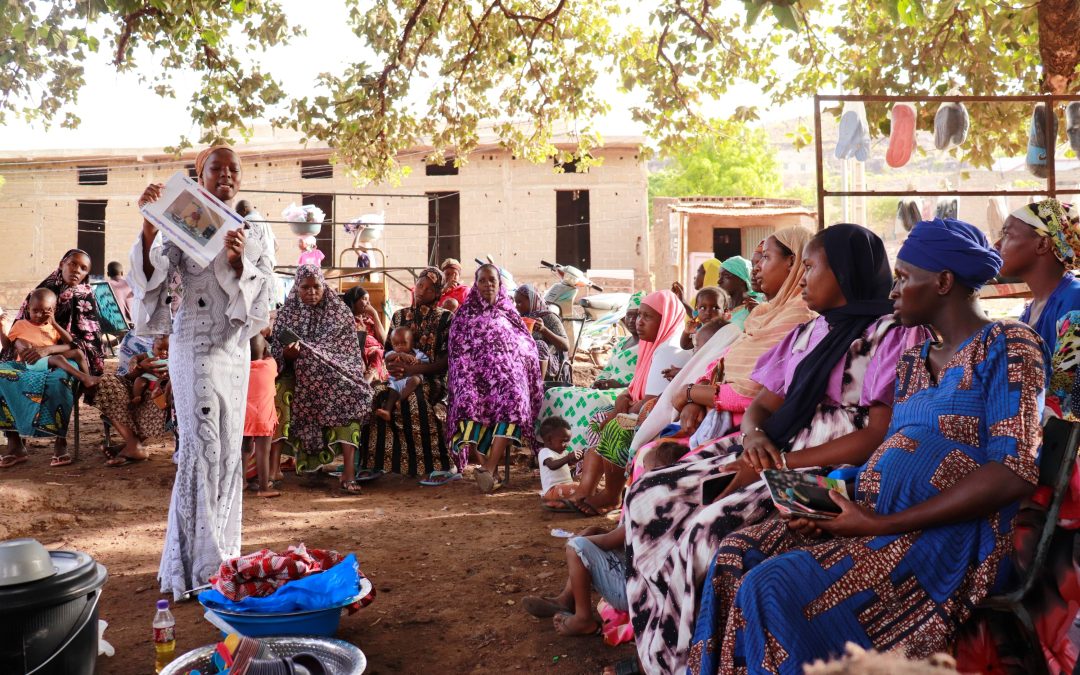
While malnutrition remains an urgent challenge across Mali, the number of malnutrition cases treated at CSCom Kalabancoro Kouloubleni has been dropping. Just like at ANIASCO in Niamakoro and ASACOS in Sotuba.
Undernutrition contributes to nearly half of the deaths of children under age 5. Child malnutrition increases the risks posed by malaria and other common childhood infections – and it has been rising rapidly across Mali. At the same time, the international aid systems that have long underpinned emergency nutrition treatment are contracting.
As our team noted last year, health centers with whom we partner were left with limited treatment options and rationed their remaining stocks of life-saving nutritional commodities. Those supplies are now gone.
The disruption leaves children at risk and it has exposed a systemic vulnerability in approaches to malnutrition treatment: relying on imported commodities to manage chronic nutrition challenges leaves communities dependent on forces beyond their control. But it also presents an important opportunity to reconsider approaches that are dependent on external resources.
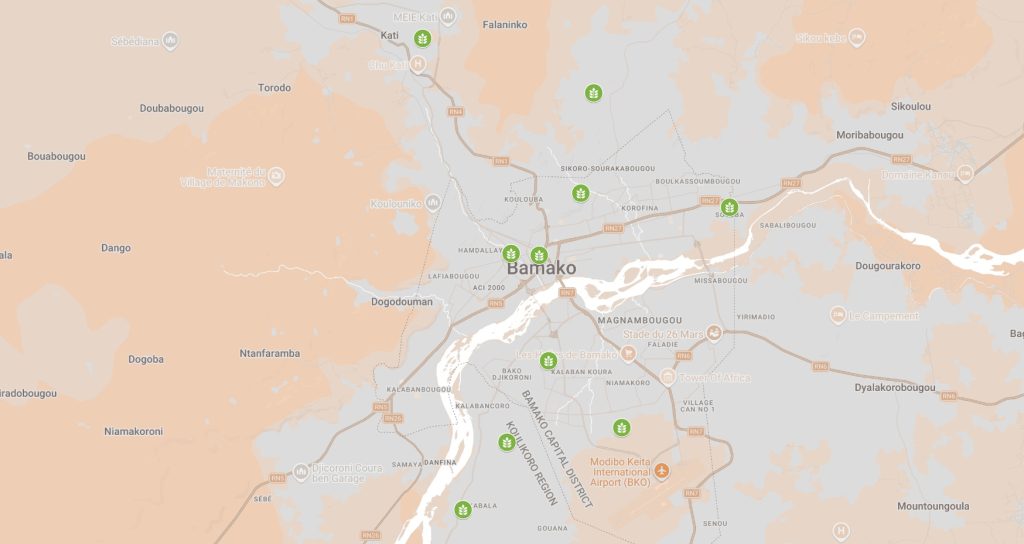
What would it mean to instead invest in approaches built on local resources? In ten communities across Bamako, Koulikoro and Kati, our pilot project is demonstrating what that transition could look like in practice.
> The need for change
In the early days of the US foreign aid funding freeze, our team identified two areas where the interruptions would have a significant impact: reproductive healthcare/family planning and malnutrition treatment.
Food insecurity and the severity of malnutrition cases has been increasing steadily in Mali. Malnutrition treatment became a concern because the standard treatment for the most advanced stage of malnutrition – nutrient- and calorie-dense ready-to-use therapeutic foods (RUTF) – is produced and distributed through international aid networks. Several nutritional supplements for the treatment of less advanced malnutrition cases are distributed using the same networks. RUTF was an effective, lifesaving resource that many depended on and it was now in jeopardy.
We cannot produce RUTF locally, and once it became clear this external resource was likely to run out, as it now has, a shift in strategy was needed. We turned to our mission – working with women and communities to develop local solutions.
> Developing a new community-led approach
To create a new strategy that shifts more control over children’s nutrition to families and communities, there were several resources we could draw from.
First are the lessons we have learned from our own community health worker program. Through the deployment of dozens of community health workers who have provided care to thousands of children and their families, we have over 15 years of experience working with community stakeholders to improve child nutrition. Though we have nearly eliminated malnutrition in families enrolled in our program, our task now was to extend the lessons from this work to the community-level, preventing every case of malnutrition in the population.
Partnerships are the best way to achieve that goal. An essential partner has been the Nutrition Division within the Directorate General of Health and Public Hygiene (DGSHP). As experts in the field of nutrition in Mali, they shared several insights that shaped the approach, with special attention to community-led prevention strategies. Since RUTF cannot be produced in Mali, our focus is to supplement the nutrition of children aged 6-59 months using nutritional supplements made from seasonal produce, aligned to local agricultural production, described below.
Health authorities at the regional, district, and community levels are also critical partners in this project, providing technical guidance, feedback and facilitation, especially related to identifying the communities where the pilot project might take place. At the community level, we worked to engage those involved in children’s nutrition – most directly mothers and caregivers, as well as nutrition health providers – in understanding their challenges and designing a pilot project to implement community-led prevention strategies that would address them. Read more about what we learned from the mothers and health personnel we spoke to here.
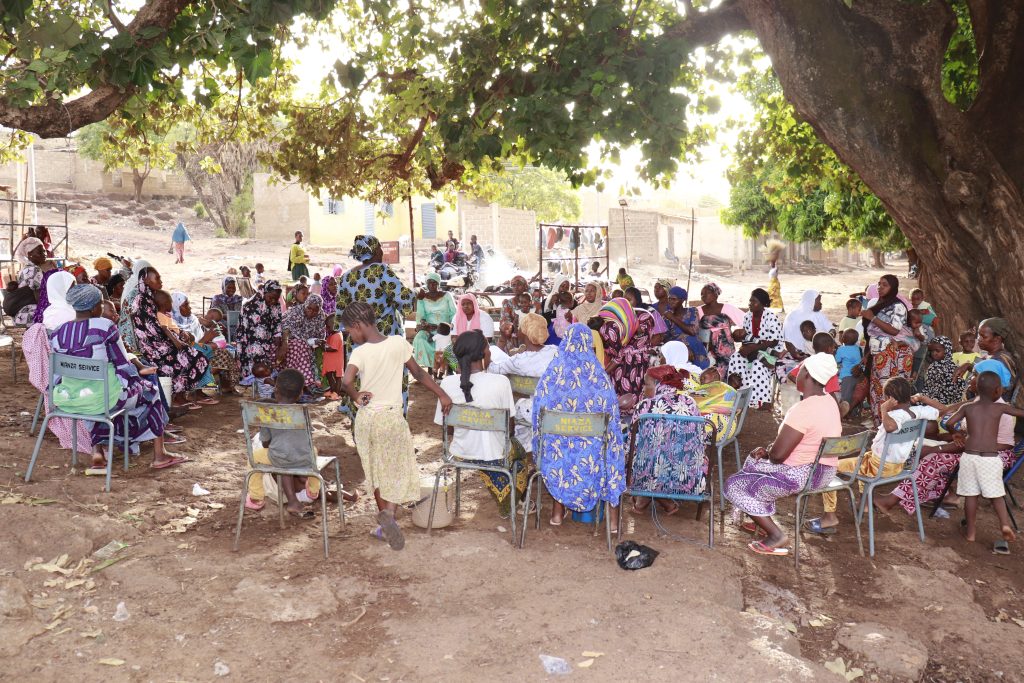
The approach that emerged is a peer-led malnutrition prevention program, centered around women leaders known as Demba Gnouman. These peer leaders were nominated by their communities and will lead the transfer of nutrition knowledge to mothers and caregivers through weekly nutrition demonstration sessions, expected to reach at least 15,000 women in the first year.
There are also nutritional education sessions organized at community health centers during their vaccination days – when mothers with children aged 6-59 months will already be at their health centers; these sessions should reach at least 5,000 women. To support this knowledge transfer, there will be close coordination between the Demba Gnouman and the nutrition officers at their health centers and we hope that community collaborations based on solidarity and mutual support will emerge.
Working together, we are aiming to reach at least 20,000 families and achieve at least a 30% reduction in malnutrition cases in 10 communities in the first year.
> Launching the pilot
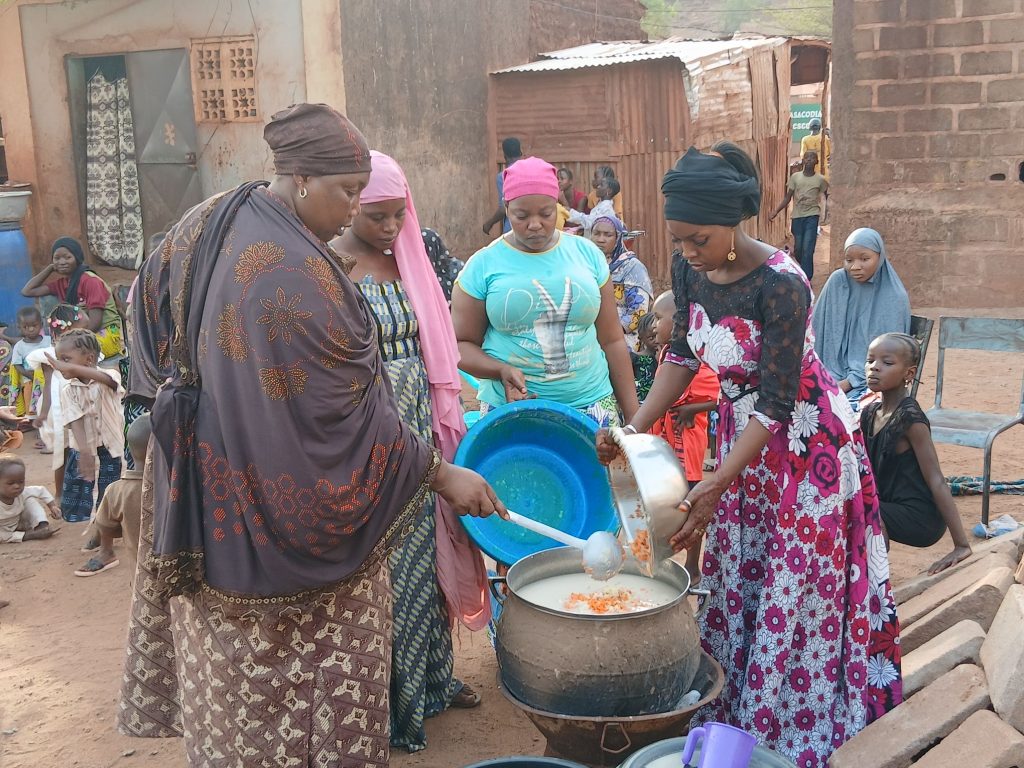
In ten communities across Bamako and Koulikoro, the pilot launched in December 2025. Our partners from the Nutrition Division took the lead on training both the nutrition officers at community health centers and the Demba Gnouman during intensive workshops focused on the nutrient-dense recipes, complementary feeding practices for infants and young children, food hygiene and WASH practices, and how to use the communication materials developed for the project to ensure comprehension by all participants.
Equipped with this training and all the supplies for their nutrition demonstrations, the Demba Gnouman took this knowledge directly into their neighborhoods. In just the initial weeks, 1088 women have attended 27 sessions facilitated by the Demba Gnouman and 880 breastfeeding mothers participated in 16 sessions at the health center facilitated during routine vaccination days.
Though it is early, partner health centers are already reporting reductions in both moderate and severe acute malnutrition cases. The initial responses from mothers, but especially from children, are promising. After one demonstration, a mother shared her observation:
My child is 10 months old. I give him Vitablé [a vitamin-enriched flour for infants produced in Mali], but he doesn’t drink enough of it. I am very surprised to see him eagerly drinking the porridge prepared by the Demba Gnouman. I will gladly reproduce this recipe at home for my child.
We are also starting to see clear indications of community ownership and local resource mobilization – both of which will be essential to the long-term success and sustainability of the approach.
Read more about what we are learning, and the next questions we’re hoping to answer.
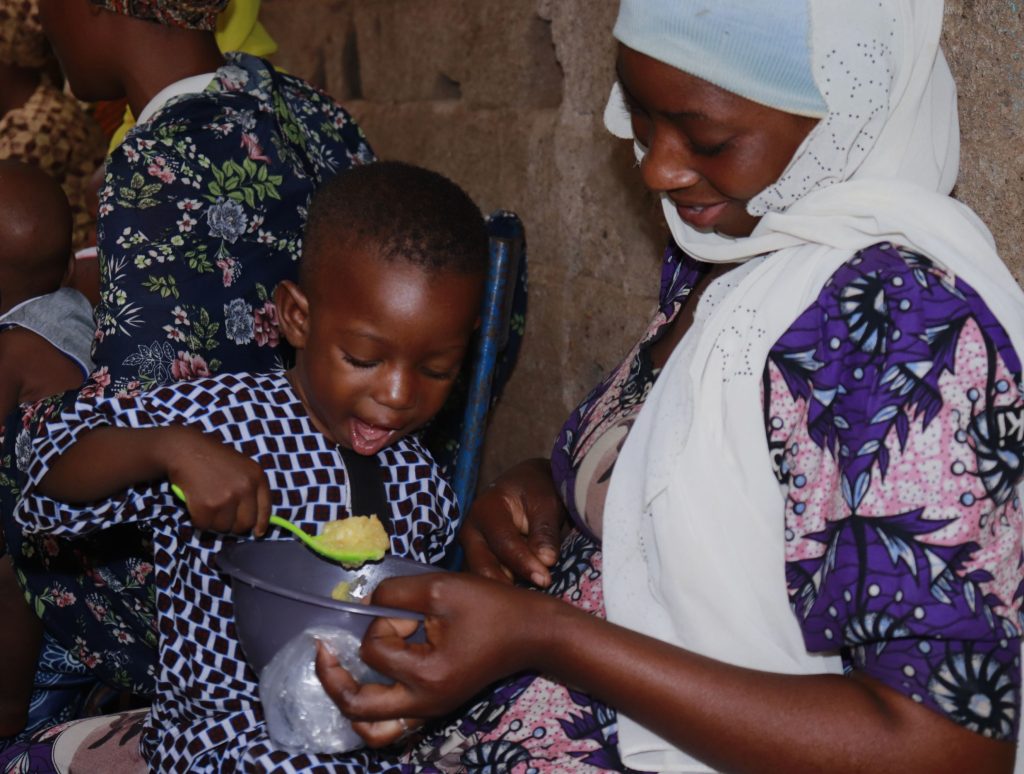
> Beyond the shelf: transitioning to nutrition supplements prepared from local, seasonal produce
Part of the pilot project’s strategy is shifting from imported supplemental and therapeutic foods to those that are grown right in their community, by their neighbors. Here’s how:
- From December to February, the focus is on abundant harvest-season produce such as cabbage, cucumber, tomato, eggplant, and guava.
- From March through May, during the hottest and driest months, recipes incorporate tubers and root crops including cassava, sweet potatoes, yams, potatoes, and onions
- From July to December, During the longer rainy-season harvest, recipes use staples like peanuts, millet, corn, beans, and peas.
This seasonal approach has several advantages that increase accessibility.
- Working with seasonal availability reduces costs, because produce can be up to 10 times less expensive during their peak production seasons.
- Seasonality also ensures reliability and availability, ensuring that there is always a local preparation method for the produce being harvested at that time.
- The use of seasonal produce strengthens local agricultural markets, like women-led gardening cooperatives.
To ensure the availability of seasonal produce in this pilot project, we are supporting the development of a gardening cooperative in each community, so that alongside sharing the knowledge of these recipes, there is sufficient local produce available to use them. Learn more about garden cooperatives, like Kolo Ni Fassa.