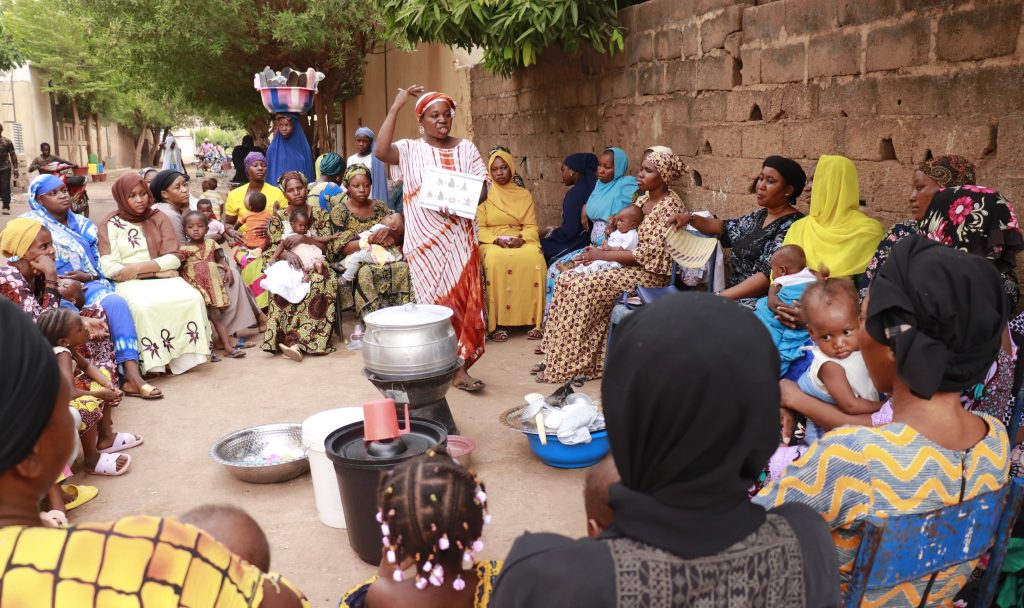
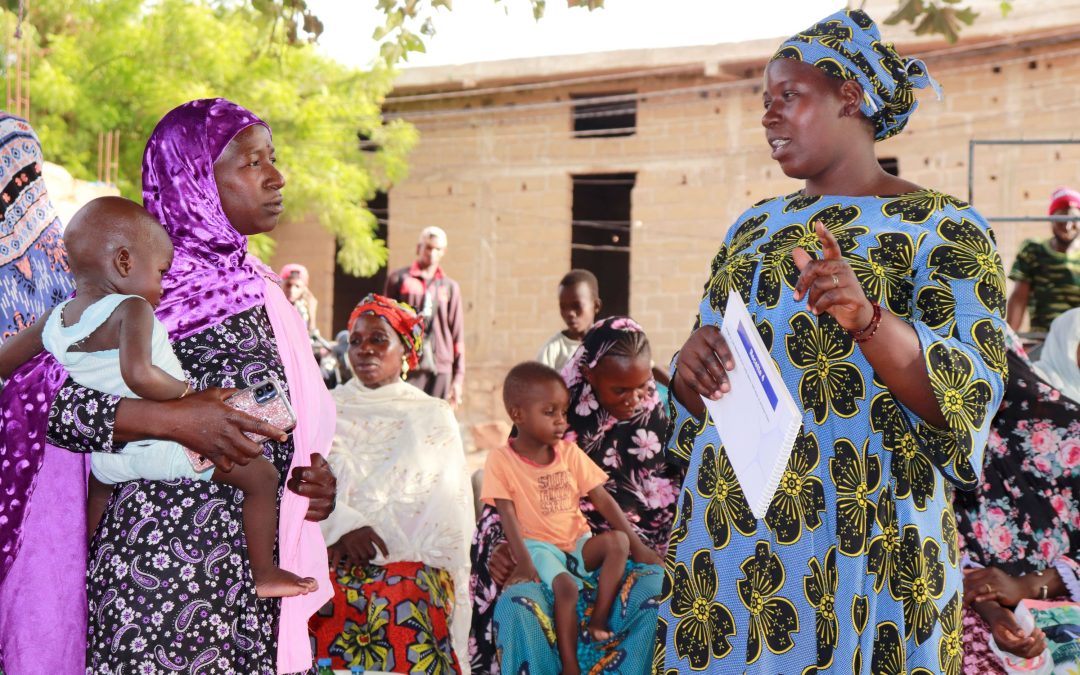
Valuable insights have arisen during the first six months of a peer-led community malnutrition prevention pilot project. As we continue to collect data to understand what is working and how improve our approaches, our primary questions relate to how communities can sustain promising initial results while ensuring community-wide reach.
Here are the highlights of what we are learning so far:
> Strong demand and consensus between health providers and mothers/caregivers
Health personnel, including nutrition officers and technical directors at partner health centers reported feeling deeply constrained by the shortage of imported therapeutic foods, with 80% of them identifying this supply gap as their primary operational challenge. Health providers noted that since running out of supplies 6 months ago, mothers have abandoned medical monitoring of malnutrition out of frustration and discouragement. Every mother we spoke to agreed, saying that the lack of supplements is the reason they no longer adhere to nutrition treatment protocols; there is no more supplementary or therapeutic food available so they have no need to go to the health center.
Both health providers and mothers were nearly unanimous in their support for alternatives. Every health provider we spoke to endorsed a shift to a local prevention approach, expressing a strong desire for what some termed food sovereignty, and independence from unstable aid networks. Both groups agreed that encouraging the use of local, seasonal produce would be a welcome change, with 95% of mothers expressing an interest in participating in collective activities to produce and prepare their own nutritious foods, like in a gardening cooperative – a strong indication of their preference for self-sufficiency over continued assistance from the health center.
There is also a shared belief about the best way to structure that local approach. Health providers identified the Demba Gnouman as the most capable and well-positioned community pillars to lead the shift to a more local and prevention-first strategy, envisioning their own clinical roles evolving into supportive supervisors and technical mentors. When asked who they trust for guidance, 82% of mothers we spoke to expressed a clear preference for Demba Gnouman over clinic staff or a community health worker, citing their shared social realities, ease of communication, and a lack of judgment or shame that would come from talking to a peer.
> An unseen knowledge gap
A common assumption is that malnutrition occurs in settings where families lack access to material resources – especially in contexts of conflict or displacement. During initial community assessments, the project discovered that most mothers and caregivers had very limited knowledge about the fundamentals of child nutrition. Perhaps most critically, they had almost no knowledge of the physical signs of malnutrition in infants. Instead, mothers frequently identified the life-threatening symptoms as other illnesses, which could delay care-seeking.
Sharing information about nutrition through relationships with their neighbors, the Demba Gnouman, could fill this gap. By listening to and watching a trusted neighbor prepare a recipe in a safe, familiar setting, mothers had a clear pathway to facilitate change in health behaviors:
Limited baseline knowledge ⤑ Practical demonstration by a peer ⤑ Increased safety, recognition, knowledge ⤑ Increased personal confidence ⤑ Household adoption ⤑ Improved child feeding practices
> Strong, comparable results
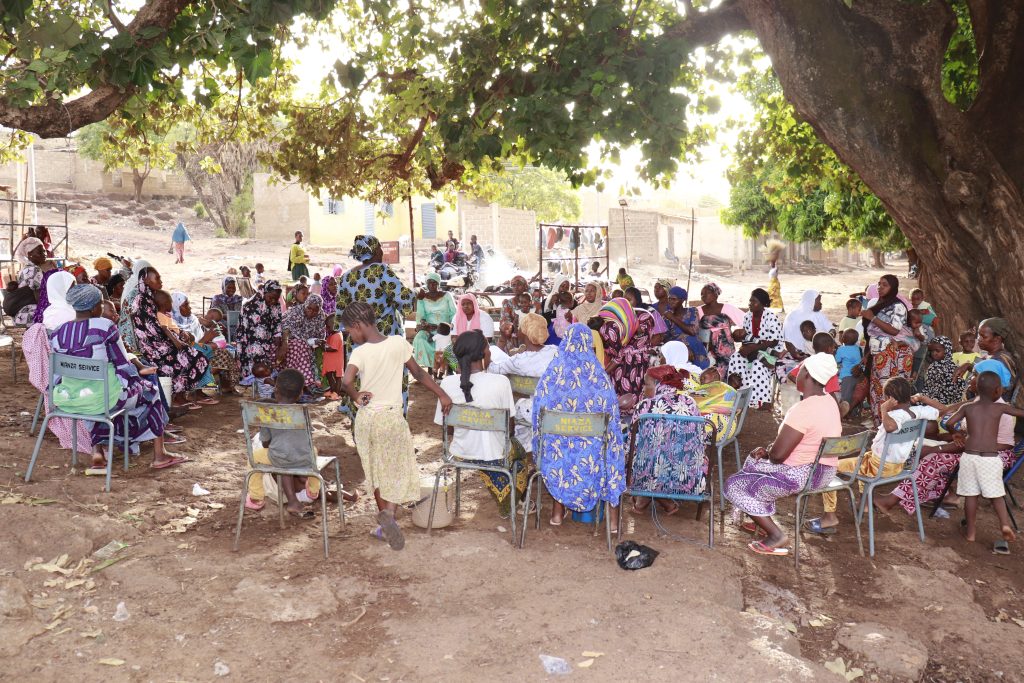
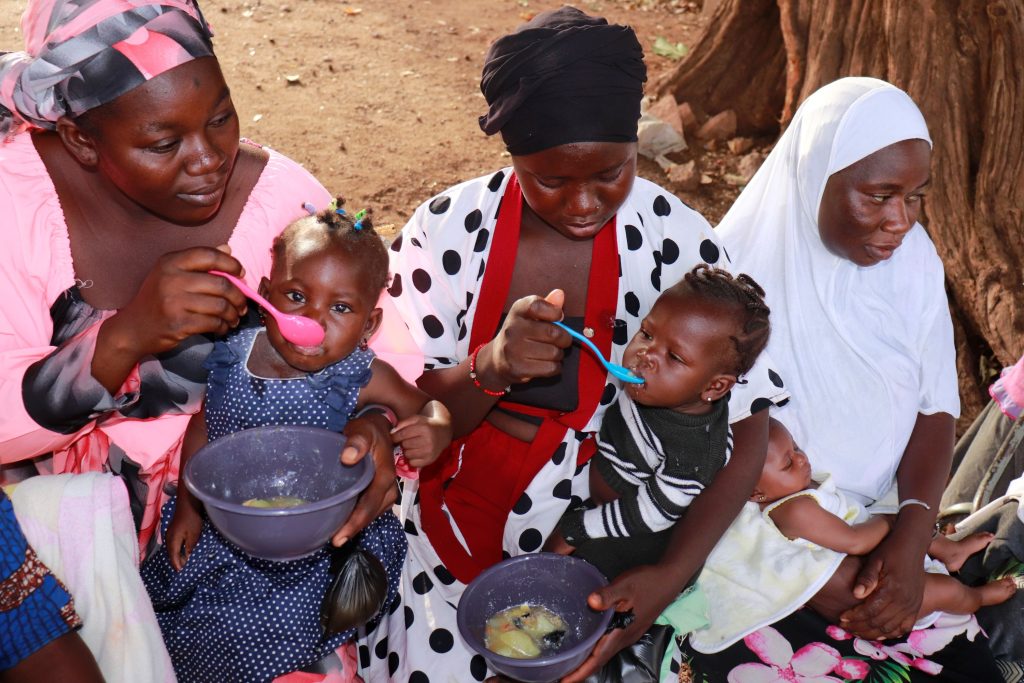
There are a variety of supplemental and therapeutic food options, many with increasingly limited availability because they are imported. We wanted to know how families, especially children, would receive a local alternative. Nutritional supplements based on local food formulations can successfully intercept acute malnutrition cases before children require more advanced therapeutic interventions at comparable cost per serving, effectiveness, and palatability.
We are seeing a very strong initial response to the recipes being used. Of more than 700 mothers surveyed during the initial 6 months of the project:
- 100% considered the recipes affordable and accessible
- Nearly 99% of mothers rated the recipes highly for taste
- 99.3% reported that their children enjoyed the recipes, and 99.1% said children consumed the entire portion served
- 99.6% of mothers reported that their children preferred the recipes to alternatives they had used in the past, including RUTF and RUSF
>> Next step: We will continue to monitor whether families and children continue to use the recipes at this unexpected level of near-universal acceptance over time.
> Community health system integration
Peer-led or community-level interventions can often be viewed as informal or “extra-clinical” activities. We do not find this distinction useful, but it is indicative of approaches to healthcare delivery that we are deeply examining. We learned from our work to improve vaccine timeliness and completion that community health outcomes improve when local care delivery approaches and facility-based or clinical care delivery approaches collaborate.
In this project, we think that integration is essential to achieving results and ensuring those results last. The pilot project is intentional about that integration, such as by ensuring nutrition information is offered during existing vaccination sessions when families are already at the health center, and by ensuring strong, mutually supportive collaboration between the Demba Gnouman and nutrition officers at the health centers. Already, that collaboration involves Demba Gnouman making referrals to the health center when they identify early warning signs, and it involves nutrition officers providing supporting supervision and technical coaching, which can strengthen the expertise and leadership of the Demba Gnouman.
>> Next step: This integration is primarily grounded in relationships, and we are interested in exploring further how those relationships can strengthen project results, and their durability.
> Local control and resource mobilization
An important definition of success is not just the project’s indicators, but the emergence of independent, community-driven action to support community malnutrition prevention. Already we observe several examples of community members building on the project activities:
- In one community, mothers established a voluntary contribution of 50 FCFA to buy ingredients and prepare the recipes collectively in their existing community groups.
- At another site, a leader collected leftover ingredients from demonstrations and, with support from the director of the health center, purchased additional ingredients to organize more sessions
- In another community, the nutrition officer voluntarily visited women’s groups, helping build trust between the CSCom and community members, consolidate ties with women’s groups, and create an environment conducive to the continued promotion of good nutritional practices.
This type of local participation and ownership is exactly what we hope this kind of approach will nurture. We believe it is a sign that community members are invested in preventing malnutrition in their community.
>> Next step: While we cannot anticipate the exact ways that local initiative and local resource mobilization will appear, we can learn more about why they did, and how to foster the flexibility that creates space for community members to adapt the approach and create local solutions tailored to the unique needs, landscape and partners in their community.
> Data in peri-urban settings
A primary data source for this project is the nutrition register at each health center. However, limitations in health data systems in peri-urban communities remain a persistent problem. Similarly, many food programmes often focus on rural areas and refugee camps; little data is available regarding peri-urban communities. Facility-based nutrition records miss an unknown portion of children impacted by malnutrition in these settlement communities, raising questions about reach and equity. Peri-urban communities are highly variable; some are densely populated, while others are more remote. If current data systems are not providing sufficient data because they cannot collect the information we need – that makes us wonder if there are other data systems that might offer a more complete picture. Are there other sources of data, outside of a clinical setting, that can help to fill that gap?
The constant community presence of the Demba Gnouman offers a unique opportunity to fill data gaps and to observe how the approach can adapt at the community level. Their daily interaction and knowledge of their communities may offer opportunities for improved community-level tracking that could help to capture children missed by formal settings.
>> Next step: We are interested to explore with our partners if there simple, replicable approaches for estimating community-level malnutrition in peri-urban areas where routine health-facility data will be incomplete.